Bilbao:
The University of Deusto and the Guggenheim Museaum in front of it

Keynotes:
Wednesday 4th Second the Best to Being
There
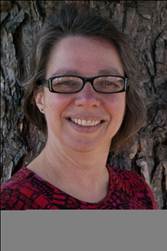
Carisa Bohus is a
pioneer of Remote Labs. In 1995 she with Burçin Aktan and Molly Shor designed a
remote lab in the Oregon State University (USA) based in the robot ERIC and
supported by NASA. The paper “Running control engineering experiments over the
internet” was presented in the IFAC’96.
She will be
interviewed by Teresa Restivo and Gustavo Alves. During the presentation they
will discuss present and future in remote experimentation. For this debate the
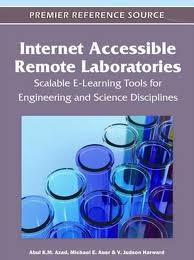
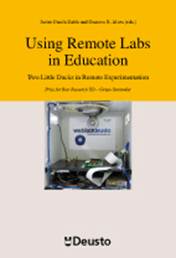
speakers will use/introduce the two books edited in the last year in the field
of remote experimentation: “Internet Accessible Remote Labs” (IGI press) and
“Using Remote Labs in Education” (U. Deusto).
Her MSc thesis, entitled "Implementing Remote Laboratories for Control Engineering: Foundations for Distance Learning" is available here.
Thursday 5th, One step ahead in the future or Labs: widgets, ubiquity
and mobility
Short CV
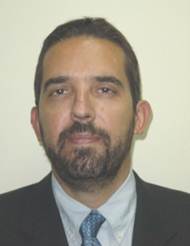
Manuel Castro, Electrical and Computer Engineering educator in the
Spanish University for Distance Education (UNED) has a doctoral industrial
engineering degree from the ETSII/UPM. Professor of
Electronics Technology inside the Electrical and Computer Engineering
Department. Is co-chair of the conference FIE 2014 (Frontiers in Education Conference)
to be organized in Madrid, Spain, by the IEEE and the ASEE. He is Fellow member of
IEEE (for contributions to distance learning in electrical and computer
engineering education) and member of the Administration Committee (AdCOM)
(2005–2012) of the IEEE Education Society and Vice-President (2011-2012) of the
IEEE Education Society; Founder and Past-Chairman (2004-2006) of the Spanish
Chapter of the IEEE Education Society, and Chair of the IEEE Spain Section
(2010-2011). He has been awarded with the IEEE EDUCON 2011 Meritorious Service
Award (jointly with Edmundo Tovar), of the EDUCON 2011 conference; 2010
Distinguished Member Award of the IEEE Education Society; 2009 Edwin C. Jones,
Jr. Meritorious Service Award of the IEEE Education Society; with the 2006
Distinguished Chapter Leadership Award and for the collective work inside the
Spanish Chapter of the IEEE Education Society with the 2011 Best Chapter
Award (by the IEEE Region 8) and with the 2007 Chapter Achievement Award (by the IEEE Education Society).
He is Vice-President of the Board of the Spanish International Solar Energy
Society (ISES).
Abstract of keynote:
Traditional laboratories have yield to
online Labs. These are actually web applications, used in blended and distance
learning, which allow students to carry out online experiments at anytime and
anyplace. Online Labs are in constant evolution due to the advance in
programming languages, communication and data networks, and hardware. This presentation will show this
evolution in the e-learning landscape, the current and future initiatives, and
the challenges that the developers of online Labs have to face.
Download the slides!

Friday 6th,
The Sharing of Online Laboratories - Beyond Technology
Short CV
David Boehringer is head of
the Computer Centre’s Department of New Media in Research and Teaching at the
University of Stuttgart. His department is coordinating the university's
eLearning and eScience activities. Since 2002 Boehringer has coached more than
400 small media projects of lecturers which aim for curriculum-embedded
eLearning settings. A recognition for this highly pragmatic approach was the
winning of the renowned Medidaprix in 2005. Boehringer is also coordinating
networks of eLearning specialists of most of the 42 universities, universities
of applied sciences, colleges of education and universities of cooperative
education in Baden-Württemberg. Right now Boehringer’s greatest interest lies
in the development of middle-ware for eScience and eLearning applications. In
this context Boehringer is coordinator of the CampusConnect and BW-eLabs
projects which are funded by the state of Baden-Württemberg and the EC funded
LiLa (Library of Labs) project that ended last December and will be continued
as Working Group in SEFI. In 2011 Boehringer was elected into the Executive
Committee of the Global Online Laboratory Consortium (GOLC).
Abstract of keynote:
The sharing of
online laboratories – virtual and remote – has been a persuasive idea for the
last decade. Today the reliable technology is there, the capacity is there, and
yet online laboratories are not used at such a scale as could be expected with
this attractive kind of eLearning content.
In his keynote Boehringer tries to analyze the
situation, point out what the obstacles are, and how they might be overcome.
Download the slides!

Friday 6th,
An ecoSystem for Every Student
Short CV
As the Director of Training and Academic Programs for National Instruments, Dave Wilson works with the both NI headquarters and more than 45 NI branches around the globe. He ensures the most effective product proficiency development strategies and tactics are implemented worldwide.
Before joining NI, Dave worked for the Xerox Corporation and Keithley Instruments as a research engineer and software developer. Upon joining NI in 1991 as a Michigan-area district sales manager, he began driving the adoption of NI measurement and automation solutions throughout the automotive industry. In this role, he presented more than 50 technical seminars, wrote hundreds of applications with customers, and received multiple industry recognition awards.
In 1995, Wilson became the director of data acquisition marketing where he led several successful launches for products that have become key parts of the NI product line including motion control, Vision, DAQ boards, and PXI. He also developed product and corporate messages and led initiatives to work with R&D to incorporate customer-recommended features into new products. In 2000, Wilson became the international sales director for NI Japan where he led the branch to record growth.
Wilson has delivered more than 60 keynotes about the application of next-generation technologies in 30 countries in Asia, Europe and the Americas. He has met with the ministers of education in both Russia and Kosovo and many Deans of engineering to discuss ways to adopt new generation technologies for science and engineering in university curricula. He has also authored numerous articles and interviewed with multiple domestic and international publications including EE Times Asia, Bits & Chips, Evaluation Engineering, Desktop Engineering, and Sensors.
Additionally, Wilson has chaired the most successful customer recognition event held by NI, the Graphical System Design Achievement Awards. For ten years, this event has recognized NI customers around the world for accomplishments in engineering and science.
Wilson holds a bachelor of science degree in applied physics from the State University of New York.
Abstract of keynote:
While the challenge of equipping students with the practical experience required for future success is more pressing than ever, robust technology ecosystems around standard platforms make it possible to build applications upon generations of innovation and theory. As these platforms evolve, cost, time, and space constraints wane so that every student can access industry-standard technology anywhere, anytime to bridge theory and simulation into experimentation to "do engineering". Join Dave Wilson as he previews the next ecosystem that will make it possible to take the relevant challenges that attracted students to engineering in the first place and put them in the palms of their hands.